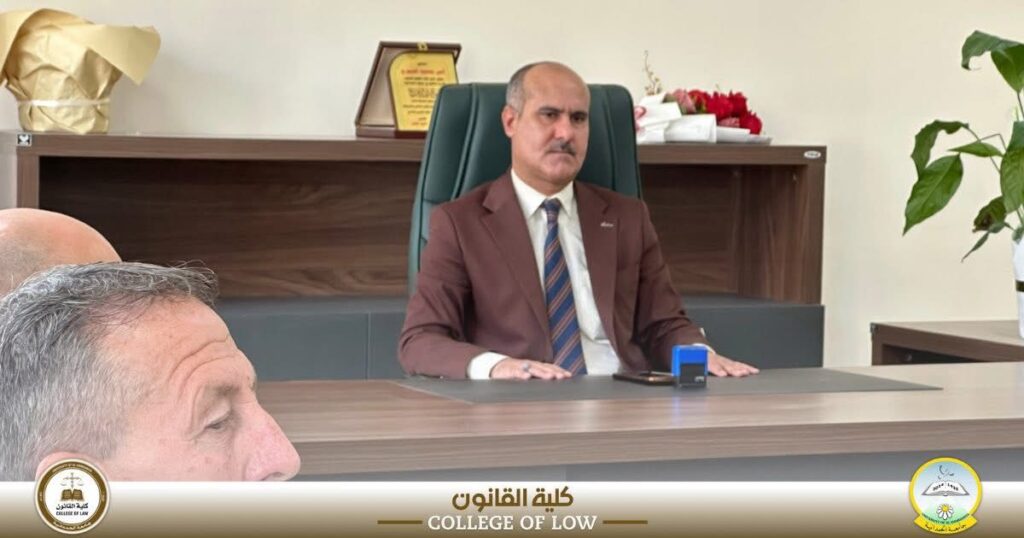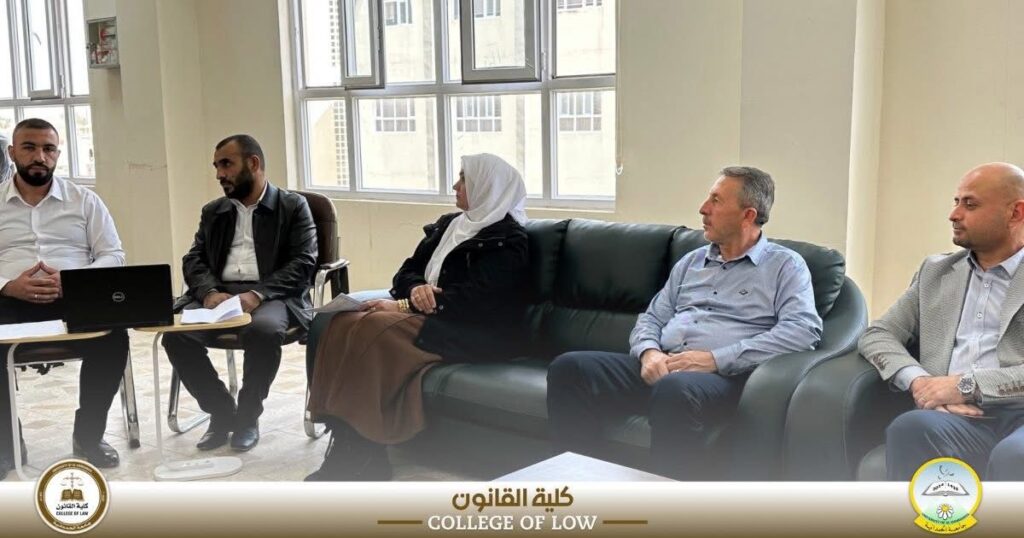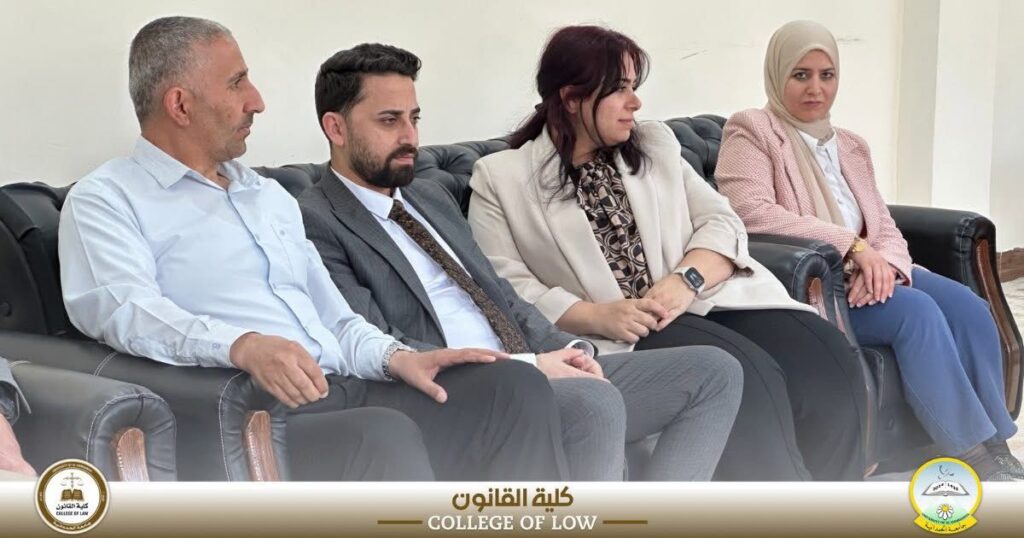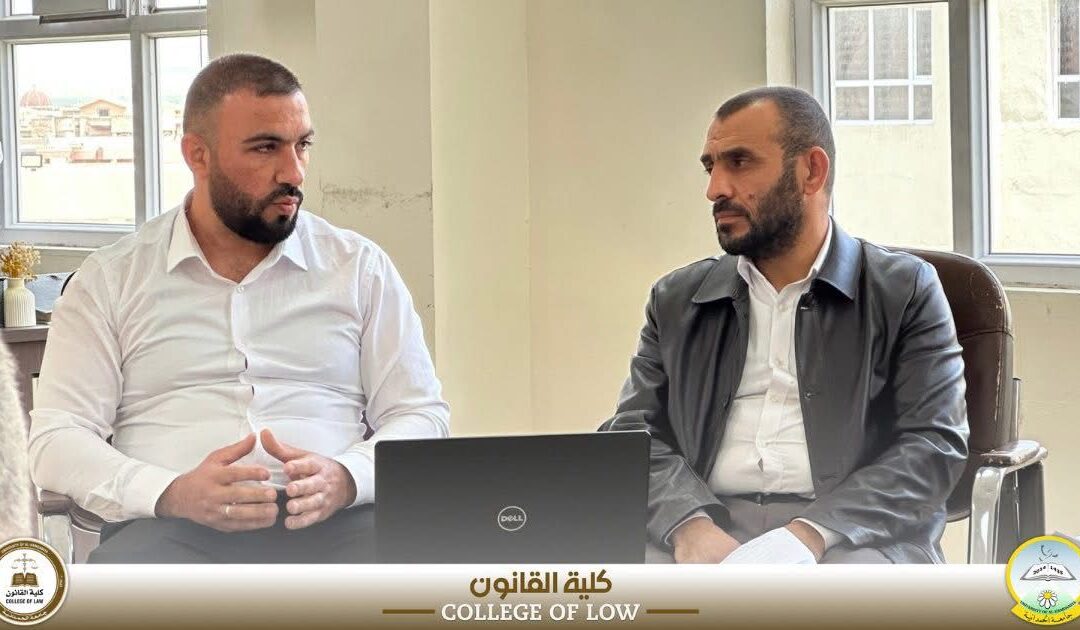
Under the patronage of the President of the University of Al-Hamdaniya, Professor Dr. Nashat Mubarak Saliwa, and under the supervision of Professor Dr. Anas Mahmoud Khalaf, Dean of the College, the College of Law organized a workshop today, Monday, April 6, 2026, titled: “The Position of Islamic Jurisprudence and Legislation on the Phenomenon of Suicide.” The event was held in observance of Hope Day for Suicide Prevention.
The workshop commenced by highlighting the profound dimensions of this phenomenon, which has become a growing concern for modern societies. Dr. Omar Ahmed Khalil presented the legal framework, detailing the legislative philosophy in addressing suicide. He emphasized that modern civil laws, including Iraqi law, do not impose criminal penalties on those who attempt suicide and fail; this is based on the principle that such individuals require psychological care and rehabilitation rather than punitive deterrence. However, he noted that the law maintains strict rigor and imposes severe penalties on “instigators” or “accomplices” who exploit the vulnerability of others to drive them toward ending their lives. In this way, the workshop concluded that protecting human life is a shared responsibility, beginning with spiritual and religious motives and ending with the legal framework that safeguards individual security and social stability.
The second part of the workshop featured an extensive presentation by Assistant Lecturer Mustafa Katheer Saeed regarding the religious framework. He explained that Islamic jurisprudence views the human soul as a trust (Amanah) bestowed by God upon the individual. Consequently, committing suicide is strictly forbidden (Haram), as it is considered a transgression against the Creator’s sovereignty. He focused on the role of faith and reliance on God (Tawakkul) in creating a psychological balance that prevents individuals from reaching the brink of despair, reinforcing the idea that patience in the face of worldly hardships is part of the spiritual trial for which a person is rewarded.