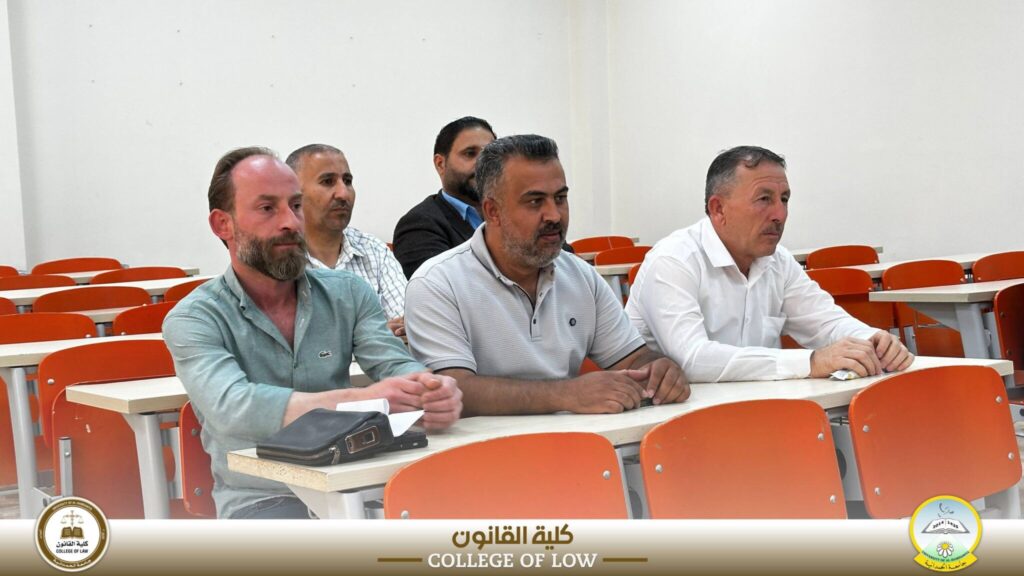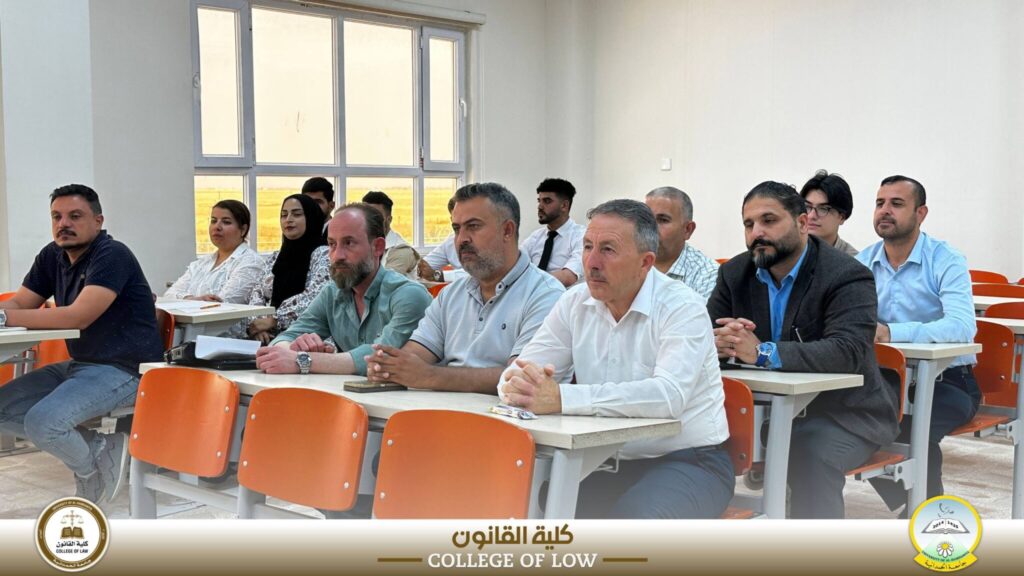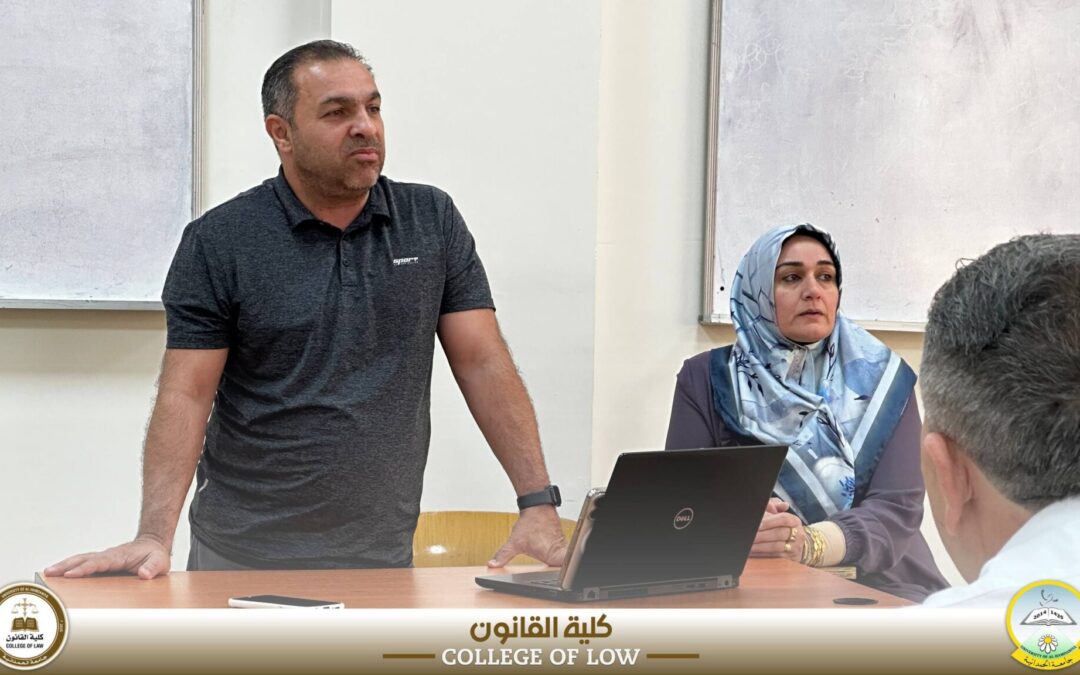
The Quality Assurance and University Performance Division, in cooperation with the Continuous Education Unit at the Faculty of Law, organized a scientific panel discussion titled: “The Role of Society in Combating Corruption / A Realistic Perspective through an Academic Lens.” The symposium featured presentations by Assistant Professor Dr. Radwan Hisham Hamdoon, Assistant Dean for Administrative and Financial Affairs, and Ms. Shaimaa Qais Qasim, Head of the Quality Assurance Division, amid a wide and distinguished attendance of the college’s professors, lecturers, and students.
The symposium commenced with the presentation of a realistic academic reading detailing the dialectical relationship between society and manifestations of corruption. The two lecturers reviewed the structural dimensions of corruption and its direct impact on disrupting development and the loss of rights, emphasizing that combating this scourge is not limited to government effort or individual regulatory oversight, but rather requires a genuine community partnership that begins from the family and educational institutions to form a conscious front that rejects all forms of nepotism and illicit enrichment, and works to promote the values of integrity and justice.
The presentations also focused on diagnosing the current reality and comparing it with academic and legal visions, as light was shed on mechanisms for activating popular and community oversight and the role of cultural and university elites in spreading legal awareness, while pointing out the importance of institutional quality in improving administrative and financial performance within educational institutions as an essential step and a model to follow for building a transparent professional and social environment subject to standards of accountability and good governance.
In conclusion, the symposium witnessed great interaction through extensive interventions and discussions presented by the attendees, which focused on finding practical solutions that touch upon the lived reality, while the Deanship of the College valued the efforts exerted by the lecturers and organizing committees, reaffirming the college’s continuation in organizing these purposeful activities that seek to connect the university with society and actively contribute to addressing its vital issues.